
montessori’s living legacy

As part of the celebration of Dr. Montessori’s birthday last summer, I was asked to participate in a global, daylong series of webinars, sponsored by Montessori-Haus Asia that spanned five time zones: China, Australia, Indonesia, Kazakhstan, and my house in Berwick, Maine, United States.  As a nine hour event, it was meant to reach an international audience with the question, “One hundred fifty-five years after Maria Montessori’s birth, what is her legacy?” The word legacy seems, at least for me, to connote something that is finite. It was accomplished, in the past tense, and it’s been left to a school, a community, the world. That doesn’t really fit how I see Dr. Montessori’s work, and that formed the basis of my session. I see the Montessori method as alive and current. What she initiated as supposition, has become accepted conclusion.

I talked about the enormity of research, really over the last 50 years, be it educational or even neurological, that supports what Dr. Montessori somehow intuited over a century ago. They are too numerous to list here, but here are a few, just in the last 20 years, to highlight a small fraction. A study comparing Montessori and non-Montessori elementary students found Montessori children showed “superior outcomes in reading, math, executive function, and social problem-solving, suggesting the method supports both academic and social development.” (Lillard & Else-Quest (2006, Science) Research following Montessori middle school graduates into high school found they “performed as well or better than peers in math and science, indicating Montessori builds a strong foundation for later academic success”. (Dohrmann et al. 2007, Journal of Research in Childhood Education) An early difficulty interpreting Montessori studies was that it was conducted by Montessorians, which is of course, just bad science. There is much more rigor in these more recent studies. A randomized controlled trial of Montessori preschool programs showed “children had better academic outcomes, social understanding, and mastery orientation compared to peers in conventional classrooms.” (Lillard et al. (2017, Frontiers in Psychology) According to another study, using experience sampling (when subjects record their feelings and thoughts in real time), Montessori adolescents reported “higher levels of intrinsic motivation, interest, and engagement in learning than peers in traditional schools.” Rathunde & Csikszentmihalyi (2005, American Journal of Education)  A similar study found Montessori students demonstrated “greater social cognition and positive peer interactions, suggesting the prepared environment fosters not only academic but also social-emotional growth.” (Lopata, Wallace, & Finn (2005, Journal of Research in Childhood Education). And last Spring, I read a fascinating study, reported in MontessoriPublic, titled, “Learning by Heart or with Heart: Brain Asymmetry Reflects Pedagogical Practices”, published in Brain Sciences (August 2023). This study used “neuroimaging to compare brain hemisphere asymmetry in schoolchildren educated in traditional versus Montessori settings.” On admissions tours at the Cornerstone School, I often joke, sort of, that, “Montessori kids are just wired differently”. I was right! Traditional‐schooled children showed “greater rightward asymmetry—linked with fixed, situation-specific memorization, but Montessori students showed left-dominant asymmetry, associated with semantic encoding and flexible conceptual connections.”  As Montessori educators, we feel that our classrooms support not only  in-depth learning, but also a deeply integrated experience that weaves knowledge in all curriculum areas into an integrated whole. A tapestry of understanding. It’s gratifying to know the concepts which Dr. Montessori felt were true, are in fact demonstrably true.
fingers pointing at the moon

Masha spent the first few weeks in Tel Aviv in a bomb shelter. In an incredible act of bad timing, her long-awaited move to Israel coincided with the missile exchanges of mid-June. I had landed in Jakarta shortly after and we started an exchange of long emails that tended to run to the more thoughtful and philosophical. I met Masha in Chicago in the summer of 2023 when she was enrolled in a teacher-education program run by the Center for Jewish Montessori Teacher Education, a course I co-directed.. Two summers later and both of us were a long way from home. She wrote that she was curious as to how the Montessori schools in Southeast Asia were the same, how they differed. The question got me thinking in a broader sense, about how the spectrum of Montessori is interpreted across cultures.

I’ve written before regarding my experience of teaching adult learners in disparate parts of the Montessori world; Seoul, Savannah, Ghana, Charleston, Haiti, Baltimore, Shanghai, Buffalo, Florida, Chicago, Portsmouth, and Indonesia both decades ago and more recently last month, in Jakarta. The lens I would use was grounded in geography and setting and even school budgets; a Montessori classroom in an airplane hangar in Carrefour, Haiti, a $100,000 worth of materials with which to present in Shanghai. Another lens is theological. While most all of my work has been in secular programs, I’ve also been fortunate to teach against the backdrop of the world’s most populous religious traditions.

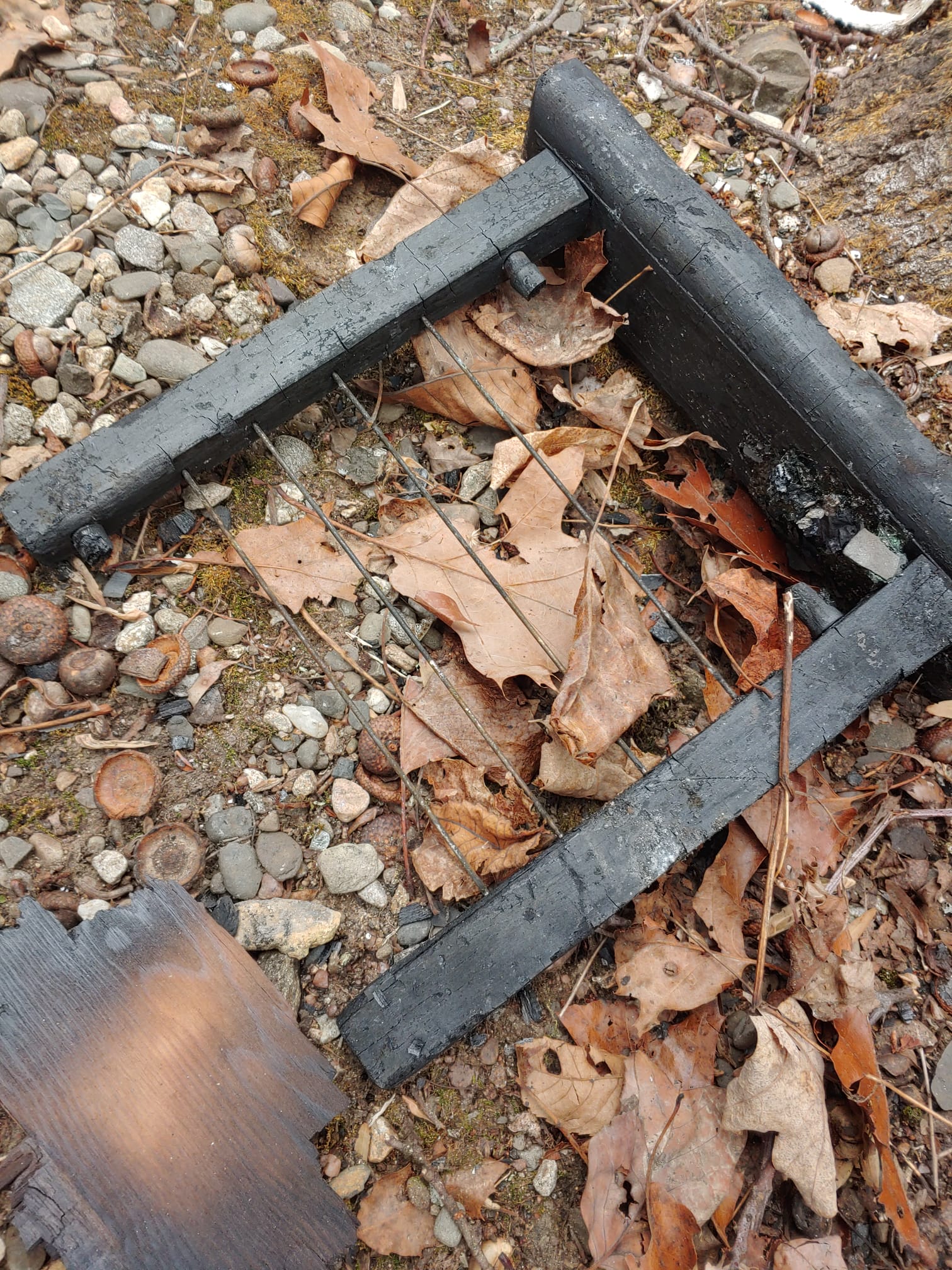
There’s a universal experience that I’ve felt with Montessori, especially now having been associated with Christian, Jewish, and Muslim communities of adult learners. A commonality among religions and the non-religious as to what inspires parents for their children, and what they hope a school environment will provide and nurture. Raising independent creative thinkers in nurturing classrooms that provide for the emotional and social development, not just academic achievement seems to be something that doesn’t care who you pray to. So things like parsha and davening, the Koran, the Torah, catechism, parables, learning Hebrew or using an Arabic moveable alphabet, those get woven into a tapestry of Montessori, quite easily. Like any course, there’s a difference in orthodoxy that’s reflected in the training, but there’s a baseline respect that you expect adult learners to share with the cohort, and that’s always been the case with my groups over the years. I don’t know as much about the scope of schools where these teachers will be guiding children. It’s clear that there’s a diversity in socio-economics, as there is everywhere, including the U.S., but in developing countries those lines are more jagged. I saw bead frames made of plywood and string instead of maple and gauge wire, but it’s a bead frame. Adds the same way. There’s a Buddhist concept that metaphors different religions as fingers pointing to the moon.  Some people, even and in some cases especially the learned and “holy”, get caught up in whose finger is more devout, which finger is more accurately pointing to the transcendent and resplendent. Forgetting the moon entirely.

During a speech at the Montessori Teaching College in London, Mahatma Gandhi, referencing a speech by Dr. Montessori, famously said, “If there is to be peace in the world, it will begin with children.” Children tend to see the moon, so perhaps the universal appeal of Montessori to parents can play some role in resolving conflict. The subjunctive use of the word “if” has always interested me. Gandhi was hopeful, but from experience a realist as well. Masha writes that the ceasefire has allowed her more time up and out instead of down and in. She’s looking for work, planning on contacting Montessori schools, applying for a position. Masha is both kind-hearted and open-minded, curious, and growth-centered. She’ll be fine, great in fact. I hope she keeps writing.

jakarta june

First, remember that sambal is included with every meal. Lunch and dinner bento boxes will always have a snowball of rice, wrapped in twisted paper. “It’ wouldn’t ‘s not a meal if it doesn’t have rice”, one dear friend informed me years ago during my first trips to Indonesia, and I’m sure her opinion has not changed. There will be beef or chicken, tempeh or tofu, cucumbers raw or greens cooked, but do investigate the sambol first. This relish of hot pepper and oils comes in varying degrees of heat, the most mild being “oh wow, (running nose sniff), that is… (sweating forehead) powerful” and progressing to “I think just a bit on the tip of my tongue will be good for the day”. At no point should you look around at your fellow diners and note how all of them have dumped the entirety of their sambol, heaping tablespoons of magma, onto to their food without concern or comment. Do not feel pressure to emulate.

So yes, there is heat in this beautiful country. Heat in the tropical day and reflected evening, heat in the bright batik colors of shirts, dresses and hijabs, heat in the sambol and black pepper sauce, but also in a collective passion for Montessori education, still in a nascent stage for Lower Elementary. Consider this a note from abroad, saying that Montessori is alive and well, and well, growing in interest and scope in Java, Sumatra, Surabaya. After five virtual webinars in the Spring, concentrating on philosophy and methods, it was an honor to participate in the first comprehensive teacher-education program for Montessori Lower Elementary in Indonesia, and the first to run for two consecutive weeks, This cohort of twenty plus adult learners, working through Montessori Haus-Asia, spent a week each learning and practicing Arithmetic and Geometry. It’s easy to say that they were among the most hardest-working and practicing groups I’ve engaged with as a teacher-educator, a role I’ve played with TEPs since 1992. I often tell groups that a successful training session is really a partnership; a high level of positive energy that both presenter and adult learners bring to the process, is crucial to its result. These past two weeks were testament to that supposition, and very much looking forward to more to come in 2026. Bring on the sambol.

montessori without materials

A dear friend messaged me in late December. Her small-community Montessori school in upstate New York had suffered a fire about halfway through their Chanukah break. She had started, directed, and taught this single Primary Classroom for decades in a beautiful classroom in her home. Persuaded to open an Elementary program by parents not eager to leave the nest after Primary, she re-doubled her efforts, took training for this new level, and secured separate spaces for both classrooms at a local temple. After the requisite two years of trial and error, mistakes made and lessons learned (by both students and teacher), they had reached a state of peace and learning, in space and spirit to match the Primary room.  “It wasn’t perfect, but it was lovely”. The fire destroyed the library and all the musical instruments. The smoke damage rendered the classroom materials unusable. As any founder/owner knows, most every piece was purchased and maintained by her, a summing of a life’s work and devotion. “I am gutted.”

Soon after, she sent photos of the fire, taken by a firefighter who is also a photographer. After a career that spans four decades, I have been in countless Montessori classrooms, and with rare exception, they are oases of beauty and learning, simple and elegant, color and contrast. Designed to be welcoming to children, they are equally welcoming to adults. In these photos, however, fire fighters in heavy suits and trailing hoses, walk through a classroom across sodden and charred building material. The juxtaposition is startling and upsetting. Our association with a Montessori classroom, the peace, the beauty…. and elemental destruction.

A second set of photos glimpsed the first day back for the children. The Primary classroom was back in its original location, in her home. There is a paucity of materials on the shelf, those saved by being in deep storage, but the children are doing what they do, getting on with it. There are sandpaper letters forming words on a rug. A child is spooning a practical life exercise on the right while others are gathered near a window in the Sensorial area. The Elementary students, with only pencil bags and journals, are pictured in a spare church room, devoid of even appropriate furniture for children, let alone any Montessori materials. But the children are gathered at circle, as they would, most turned toward the viewer, all of them smiling. They are children, they are classmates, this is their teacher, they are together. I remarked that it was reminiscent of that scene from the Grinch that Stole Christmas (which I’m pretty sure isn’t a Chanukah movie). The presents don’t make the holiday, and the materials don’t make a Montessori classroom. I will sometimes ask my adult learners to make a hypothetical choice. Do you want to work or send your child to Classroom A that spent $50,000 to fill it with the finest, brand-new Neinhuis materials, but where there is no community, love, respect, peace?  Or Classroom B, with no materials, but loving kindness, support, mindfulness, and energy. In over 30 years of teacher education, not a single teacher has made the wrong choice.

kindness in a montessori classroom

One positive aspect of the social media explosion is the ease of staying in touch that it affords. Alumni and their parents now share their post-Montessori school experiences more freely, because it’s just a click/send away. For some past students, their time in a Montessori school represents 12 years of their life, building a sense of ownership and home that is not forgotten by a mere change of address. In short, these schools commonly receive letters. The following is from a parent, a forwarding of an e-mail the parent had received from a high school teacher of a Montessori graduate: 

“I just wanted to let you know your son ended the semester with one of the only A+ with Honors I have ever given. On that note while I know you know how talented he is, I want to throw in my 2 cents that he should take as many AP classes as possible next year. I have tried hard to keep him challenged in my class, but he is so far beyond other students that I don’t think regular classes are the place for him.”

Truthfully, this is not uncommon for Montessori graduates, but the parent highlighted the second part of the teacher’s e-mail as being more meaningful: 

“The other thing I think is great about your son is that even though he finishes his work easily, he helps other students. There is one student in particular that sits next to him and she struggles every day. With the patience of a teacher he helps her ALL class. Sometimes I think she is going to wear on his patience but he just gently answers her questions.”

Can kindness, in fact, be taught? As Montessorians, we would answer, “No more than we ‘teach’ geography or arithmetic or science.” Rather, a Montessori school creates an environment, carves a space, and maintains a culture that allows a natural process to take place. And while it is not quantified on any conference report, the grace and courtesy aspect of our curriculum is an integral component of the fabric of our classrooms. This serves, strongly, as the tapestry on which our lessons are woven. It is so present, in fact, that a consistent comment I hear from prospective parents, even after a mere 20-minute observation, is the kindness they witness amongst our students, regardless of class level. Most Montessori teachers will relate similar comments from docents, waiters, park rangers, or other adults encountered on field trips.

One time, after an especially moving observation, a prospective parent sat with me in the hallway, asking me the hows and whys of our school. This parent enthusiastically embraced the peacefulness and kindness she saw that morning. “Does that happen every day?,” she asked, perhaps a little suspicious. At that precise moment, two 3-year-olds walked by, hand in hand, on their way to deliver a note to the office. “Yeah,” I said, “Pretty much.”

the spilled water lesson(s)

Maria Montessori said, “Never help a child with a task in which he feels he can be successful.”  This means that a child who is learning something new should be given the freedom to try to succeed.  If we as the adults rush in to “save the child”, the child will not learn.  Children learn through their activity, through their effort, and, very importantly, through their mistakes!  

Let us consider a child in our classroom.  He approaches the practical life area and sees a tray containing a small pitcher of water and a glass; it is a pouring work to practice control of movement.  He chooses to bring it to a table where a friend awaits.  The teacher is observing closely.  Perhaps this child has been shy about trying new things and here he is, ready to take on this challenge.  He has been given a lesson in carrying a tray with water and cup.  One must be very careful when lifting the tray, to turn slowly, and place each foot slowly, one in front of the other, as you move across the room, keeping one’s eye on the tray to keep it level.  He takes one step, two steps, he hears a bird call and his attention is drawn away from the tray.  The pitcher begins to slide…..!

The teacher is still watching.  They consider to themselves, “What is the best thing that could happen right now?” “What is the worst?”  We may think that the best thing to happen would be for the child to successfully walk across the room and gently place the tray and pitcher on the table.  How proud he will be!!  He did it!  And this would be wonderful, no doubt.  But let us consider the opposite outcome.  The tray tilts, the pitcher slides, the water, pitcher and cup all spill to the ground.  What does the teacher do?  The child is upset and so the teacher comes to his side and comforts him, yes, but very quickly asks him what he needs in order to clean the spill (a rag, they are kept by the sink), how to sweep up any pieces of pitcher or cup (a broom and dustpan hangs on the wall), how to wring the wet rag out (a bucket is under the sink), and how to tell his friends and classmates to be careful of the spot until it dries.

What are the lessons learned here?

  1. My teacher loves me.  They do not yell or scold me if I make a mistake. If I make a mistake in my math or reading, they will not be angry.  I have learned that it is a good thing to try things that are difficult. I will learn more if I take risks, try difficult math problems, sound out difficult reading words.
  2. When I make a mistake, there is a way that I can make it better. I have learned that math problems can be corrected, words can be erased and spelled correctly.  If I hurt a friend’s feelings, there is a way to make it up.  My actions have consequences, and I must deal with them, but I can try to correct my mistakes.
  3. This is how a spill is cleaned, I know where the tools are and how to use them.  I have learned that I can be independent. I can take care of things on my own.  I don’t realize that the movement of my arm in wiping the spill, and the fine motor control I exercised in wringing the water out will help me later when I learn to hold a paintbrush and pencil and learn to draw and write.
  4. The whole class has learned a lesson!  All eyes are on the teacher if the water spills, to see how they will react.  There is no scolding, no impatience, no anger.  Only calm and peace.  The rest of the children learn that this is a safe place.  Engage, try, fail, try again, succeed!

still learning after all these years

Way back in the day of my Montessori career, like early morning, I gave my first talk at an AMS National Conference. So long ago that it wasn’t yet called the Montessori Event!. I’ve added an exclamation, but perhaps that’s how it’s supposed to be spelled and pronounced now? In any Event (see what I did there?), that year it was in Chicago and my rather ambitious topic was “Zen and the Art of Montessori Teaching”. Leading up to the presentation I had nightmares, envisioning a group of saffron-robed Buddhists shouting me down as “not knowing what I was talking about”.  As I was barely thirty-years old at the time, those dream monks may have had a valid point. The main thrust of the talk was how difficult it was to stay present as a classroom teacher, to stay in the moment, to stay in the “now”. How difficult it was to maintain a “beginner’s mind”, a concept explained beautifully in Shunryu Suzuki’s seminal book, “Zen Mind, Beginner’s Mind”. The idea being that often it is our younger and less experienced teachers that bring a more valid view to a classroom, a child, a material. They are unburdened and unshackled from preconceived notions of an area of the environment, or the behavior of a child.  “We can’t put the group circle there, because I’ve tried that before and it didn’t work”. “That intervention won’t work for them, because I had a student just like that before and it didn’t work”. It could well come to pass that a new teacher tries something and observes the result to be disastrous, but at least it fails on its own merits. There’s honesty there. My presentation concluded along the lines of keeping yourself open to new visions, strategies, concepts, children, because truly we never experience the exact same classroom twice, even moment to moment. In more modern, more trendy language, it would probably translate to “keep and cultivate a growth mindset”, but I like “beginner’s mind” better.

This past week, I gave a series of webinars online, at the request of Alison’s Montessori; the subject being Geometry at the Elementary Level. Included in the many materials I presented, was the Triangle Drawer of the Geometric Cabinet, specifically, The Sum of the Interior Angles of a Triangle. It’s one of my favorites. Tracing the Seven Possible Triangles in the Universe, children color the angles in red, cut them out, and lay them angle to angle to angle, showing they form a straight line, a straight angle, 180 degrees. It  illustrates quite elegantly the difference between a traditional school experience, starting with the answer and those dry “If…. When” statements from 9th grade Geometry textbooks, and a more constructivist model in a Montessori classroom, done when the student is ten years younger and ten years more interested in Geometry. Not wanting to reveal in great detail just how old I am, I have probably given that presentation a few hundred times to both children and adult learners. It’s hard to hold on to that beginner’s mind when your mind could probably do that lesson and check email at the same time (Important Note: I didn’t do that). “Are there any questions?”, one politely asks the group at the end of any lesson. I was only mildly flummoxed when a teacher asked, “Why?”.  “Why do we show this lesson?”, I replied.  “No, why do the interior angles add up to 180 degrees?”  My brain rolodex started to spin… surely I knew the answer to this question… had no one ever asked me such an eloquently simple thing? Much like the Grinch when he attempts to assuage Cindy Loo Who (who was no more than two), I fumbled a bit, drawing circles around each angle… in the end admitting that I was botching the whole thing quite royally. Sigh. The next day, it was off to the Internet to find the answer.  My son, Elijah, famously (at least in our family) stated that “if you have a question, someone else had the same question”. Sure enough, there were a great many sophisticated geometry websites that gave various ways to prove the theorem, but I was looking specifically for one that could be adapted to a Montessori material. I was very satisfied to find one, using the congruency of alternate interior angles, which is a separate Montessori presentation, in the proof. Rapture! I eagerly awaited the next evening’s webinar to show the group (see photo below). It’s debatable who was the most excited, me or the webinar participants!

Dismay at not knowing the answer to the initial question quickly evaporated, to be replaced by a much more comforting thought that there are still things to be learned, still lessons to be revealed, even within experiences we’ve lived over and over.

montessori and the need for activity

Maria Montessori was a scientist interested in psychology and the unfolding of the adult through childhood.  Pedagogy, and mathematics came second.  This is an important point; her primary interest was in the process of learning, not in any one specific area. How did the physical environment as well as the human environment affect education?

When she was given the opportunity to work with children, she soon discovered that their greatest need was for activity.  She first gave the young children materials, sensorial materials, and the language associated with those objects, the red rods, the pink tower, etc…  Ever the scientist, the observer, she noted that they retained very little of the concept, and “met her with blank stares”. (honestly, I’ve had my share of those reactions over the years as well).  So instead, she simply showed the children the activity itself, the sorting, the discrimination of size or shape or color.  And? The children understood!  And Dr. Montessori understood as well.  Create manipulative materials that isolate a concept. Give the child exact instructions on how to use it, and later, but only later, will the child be responsive to language, the word lessons. Pondering upon the phenomenon, Dr. Montessori realized that 3 important things had occurred, always starting with activity: “formation of the subconscious knowledge”, “point of consciousness”, and “indirect preparation”.


The formation of the subconscious knowledge is the accumulation of impressions not consciously registered, but stored in the subconscious- An illustration of this is a person who, having for many years walked through a woods on the way to work, certainly had stored the impression of innumerable leaves. Yet he might have paid no attention to the difference between a lobed and a smooth/even Ieaf, A casual remark from a botanist would bring the difference immediately into focus. Why? because the knowledge was already there subconsciously. But if the Iong experience with leaf-impressions had not been there, would the botanist’s remark have aroused such immediate understanding? Yet something is needed to build a subconscious knowledge into the light of  consciousness’ It may be a spontaneous sudden realization, or a word after years of sub- conscious experience: a point in a Iong line that stretches into miles!

“So”, she reasoned, “this point oI consciousness can come either spontaneously or it may be provoked purposefully or otherwise”‘The indirect preparation was the unconscious or purposeful incorporation in an attractive experience of items which will prepare an ability necessary for a future task.

“Sensitive periods” were her next discovery  During these, at a determinate age, certain activities had an irresistible attraction but left indifferent younger or older children. Though the attraction lasted for a limited period, while it lasted, it made young children very eager to Iearn. This eagerness garnered Dt. Montessori a lot of criticism and misunderstanding on the part of pedagogues and psychologists who accused her of forcing children oI a tender age to do things which older children found difficult and distasteful. The greatest misunderstanding was, and arguably still, is in the field of the acquisition oI mathematical knowledge.

A few of things to keep in mind. Dr. Montessori was not interested in teaching children any particular subject. So she did not specially try to “teach mathematics”. Her interest was in the child itself and the task she imposed on herself was to try to discover the process of the natural development of the child in its various aspects. She prepared an environment which contained objects the use of which caused the children to arrive at an abstraction. The children were of mixed ages, 3 years at least, and the different groups {three to six, six to nine, etc.) were in communicating rooms so that the children could circulate from one to the other. There was no time-table as {ar as subject-teaching was concerned so that children could remain practicing the same subject for an indefinite length of time. This gave them the possibility of storing a subconscious knowledge which culminated into a conscious realization at a certain

Montessori discovered that abstraction was the result of individual experience and the time involved in reaching it vaded with the individuals. Also, the interest in the exercise was determined not by the efforts of the teacher, but by the sensitive period of the child. And finally, the materials she gave the children contained either an indirect preparation for something to come in the future, or the possibility of bringing into the light oF consciousness certain items which the child already possessed in the subconscious.

The basis of mathematics for children is counting.  Associating symbol to quantity. It was logical to conclude that the next step would be to continue with I l, 12, 13 and this D/. Montessori did for many years until one day when by chance children of this age were present at a lesson given to seven year olds with materials which presented in concrete form the working of the decimal system. The seven year olds were luke-warm, but surprisingly the younger ones showed great enthusiasm. In a day or two, they had gained possession of the materials and brought it to their room. This was another example oI the sensitive periods: what Ieft the older children more or less indifferent aroused intense interest in the younger ones.

the happy place

I’ve been spending more time this month in Primary Montessori classrooms, mostly due to circumstance, opportunities consulting at schools, and a change in role here at the Cornerstone School. After completing a Coaching Course (shout out to Elizabeth Slade and Montessori Public in Action) and finding a new teacher to work with the Junior Class on the farm, I’m afforded more time to observe in classrooms. As an Admissions Director, this is a task I should have been doing all along. 

Last week I found myself at a small school in Louisville, Kentucky. Eight children were already engaged in their morning work cycle when I opened the door so very slowly and eased into the nearby wooden observer’s chair. The focus of the group, including the teacher (along with my stealth ninja skills) was strong enough that my entry and presence was undetected. A blonde and braided three-year old was working her way through a basket of small towels, raking them across a washboard with its end in soapy water. She carefully rinsed it in a small tub of water before clasping them onto a clothesline with wooden clothespins. A four-year old worked his way through the knobbed cylinders while two friends on the floor were matching labels to planets on a circular rug. 

Right before my time was up, I watched the girl in practical life carefully tip the waste water into a bucket, and I could practically here her reciting all the steps necessary in her head. It was flawless. The walk to the sink was equally deliberate, methodical, and present. Her steps were measured, her gaze locked onto the water line sometimes coming precariously close to the top of the bucket, but never cresting the edge.  Later, the teacher caught me in the hall and I thanked her for inviting me into her classroom. She leaned in. “I knew the observation was going well because you were smiling almost the whole time.”  “Really”, I responded, “I had no idea. I think Primary classrooms are my happy place.” 

The flight from Louisville back to Boston was routed through Detroit. With a layover there, a late flight to Logan, and then a bus ride to southern Maine, it was three in the morning when head it pillow and my wife Sandi murmured a sleepy acknowledgement. There was a Parent Coffee Chat that morning and I made my drowsy entrance at 8:45. That whole trip log resulted in “note to self” regarding late night travel. In any case, I was also scheduled for an observation in a Primary classroom that morning (I know, right?). Coffee cupped in hand, I settled into a very comfy, perhaps too comfy, observation chair and took in the environment, and took in the immediate deja vu. Had I not been here 24 hours earlier? I soaked in the peace, the gentle voices, the methodical pace. And no more than ten minutes in, a first-year boy, done with his watercoloring of a map of the united states, made his was across the room from a work table to the sink. His steps were measured, his gaze locked onto the waterline sometimes coming precariously close to the top of the bowl, but never cresting the edge. I was flat-out exhausted, not gonna lie. But I think I was probably smiling.

open the door

As the “New Year” quickly approaches, the day after Labor Day for me and for many others, I’ve started to invite prospective parents to come visit, tour, and observe, starting in mid-Ocotober. It’s hard to imagine, by today’s heat and humidity, that by then the leaves here in southern New England will have their autumnal colors, the farm@cornerstone will be well-harvested, and we’ll have had at least one frost. I noted this morning that one eager family has already signed up for the first available day!

Most first impressions of Montessori take place through glass. A parent or student teacher schedules an observation, arrives at the appointed time, receives a badge, a clipboard, and a brief introduction, and then heads down a hallway and stops at the first classroom. Observers have heard of Montessori certainly, from friends or a relative, a magazine article, a blog, a lecture, or a textbook. But to many, that is just like reading the recipe without actually tasting the cake. The observers’ scrawled notes afterward are nearly uniform in content:

“I had the great experience of observing a lesson. The children had to display patience and courtesy. They teach so many things through the course of the day.”

  “Children helping each other with their work. Children do work then pick up and return work once completed. Teachers move around and help children if needed. Self-correcting work.”

  “Older children helping younger ones.” 

  “Children are all very calm and happy. Classroom is very beautiful and bright. Kids are extremely well behaved.”

  “I loved that every child was working on ‘hands-on’ activities.” 

  “I love seeing kids conversing and problem-solving together—not being “shushed.” Great cooperation. Lots of imagination.”

  “Everything with purpose.” 

“Good room flow. Teamwork and pairing. Routine and organized.”

  “Teachers kept voices low. Gentle redirection, very good patience.”

  “So many different activities happening at once. Amid all the activity the kids learn and grow.”

  “The children’s independent play—completing a task and then picking it up and putting it away before starting a new activity. The room felt very quiet, calm (no chaos). The children feel free to move around the room from activity to activity.”

  “Soft voices, individual projects and small groups. Clean and organized space. Teachers guide by example. Bright and open classrooms. Education everywhere and focus on learning.”

  “Beautiful classroom!”

To understand a functioning Montessori environment, one must see it in action, with children interacting with Montessori materials and with each other, with direction from Montessori-trained teachers, in a Montessori “prepared environment.” In this way, we can think of Montessori as being a dynamic process and, in fact, a dynamic process that is greater than the sum of its parts. If your child is in a Montessori classroom, you will eventually be found out at your neighborhood barbecue, your Thanksgiving get-together, your Christmas party, or elsewhere, having been asked something along the lines of, “So, what’s Montessori, anyway?” You will find that it is difficult to describe just one aspect of this pedagogy with any sense of completion. Those beautifully designed manipulative Montessori materials? They are certainly fundamental. The integration and crossover of curricula? Well, sure, they are important, too. The interplay of child, peer, and teacher in a carefully prepared environment? Yes, of course that. The elements of movement, the use of the hand? The nurturing of independence, of self-awareness, of self-control? Yes, yes, and emphatically, yes, they are all essential components! The 3-year age span, the developmentally based presentations, the attention to sensitive periods, the long, uninterrupted work periods? Yes, all of these points contribute to the Montessori pedagogy, but none of these points in isolation will do it justice (we can assume here that the person you’ve been speaking to at the party has, perhaps, regretted broaching the subject). A Montessori education is all of these things, integrated in play, in harmony, in success and failure, in falling down, in learning from the spill and trying again, and in growth, for children, parents, and teachers alike. To understand Montessori, you have to first look through the glass and then step through the door.