from the concrete to the abstract, part one

An overarching theme of movement from the concrete to the abstract in a Montessori pedagogy can be discovered at each level. At the Primary level (3- to 6-year-olds), this can be seen reflected in the environment itself. Primary rooms contain three distinct areas: the sensorial, practical life, and academic areas, the latter of which is itself composed of arithmetic, geometry, language, and cultural areas. While these learning opportunities are available to all the children, they tend to have a particular developmental appeal and are selected by the students accordingly. For instance, a 3-year-old, who is likely a more concrete thinker, will be drawn more intently towards the sensorial materials. The Pink Tower, the Red Rods, the Broad Stair, and the Sound Cylinders are just a few of the many materials and activities that allow children to learn for themselves the distinctions between dimension and form, i.e., size and shape. Likewise, the practical life area, with its pouring works, polishing activities, and buttoning and zippering frames, also calls to a developmentally younger student. As the child matures, his or her attention is drawn to more challenging, more abstract, and more conceptual learning. In the Primary environment, this translates to the areas of language, arithmetic, geometry, and the cultural subjects (biology, geography, and history). 

  The advantages of a multiage classroom are manifold. An environment that encompasses learning materials ranging from the concrete to the abstract, and available to children over a 3-year age span, allows them to be successful where they are developmentally, regardless of their chronological age. This is not to say that a 5-year-old never uses the Lacing Frame, but one can speculate that for a 3-year-old it is a work of great concentration, while the 5-year-old uses it to take a mental break. And while the different areas of a Primary classroom are separated spatially, it is important that they are well integrated with each other. For example, the sensorial area serves as an indirect preparation for math, while the practical life area guides the child’s fine motor skills towards the development of writing skills.

At the Lower Elementary level, this development can be understood most clearly if we discuss the scope and sequence of the arithmetic curriculum. The Lower Elementary arithmetic curriculum includes, among many other concepts, computation in whole numbers, using all four operations. As they enter the environment, children are, by and large, in the nascent stages of “formal” computation. By the end of this 3-year cycle, many, though certainly not all, will gain a facility with math facts and will be able to add, subtract, multiply, and divide abstractly, to some extent, using just pencil and paper and no materials. This example represents a remarkable academic, psychological, and spiritual journey taken within each student. 

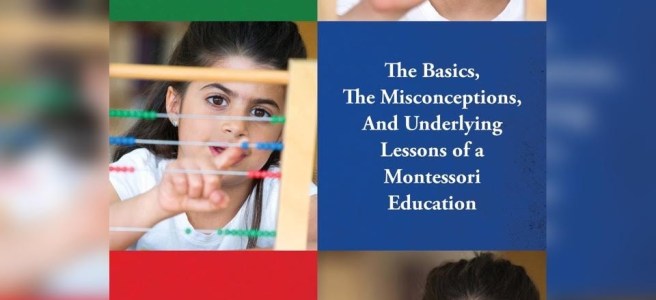
Through the use of manipulative materials, the child constructs an understanding of concept and a memorization of computation that eventually lead to abstraction. When we explore the materials and activities, it becomes obvious how they lead the child from stage to stage. Let’s look only at addition and allow this specific study to serve as a microcosm of the whole. The Golden Bead material consists of individual golden beads, beads strung into ten-bars, bars wired into hundred-squares, and squares wired into thousand-cubes. Thus, a child adding two four-digit numbers is adding actual quantities of beads. As the child gains understanding, he or she will be presented the Stamp Game, which represents a large step towards abstraction. In this material, individual tiles are stamped with various place values (1, 10, 100, and 1,000) in the hierarchical colors for units, tens, and hundreds. The child, however, still lays out each quantity, making exchanges if a column’s total exceeds nine. Next in the sequence of materials is the Bead Frame, an abacus that uses the same hierarchical colors as those in the Stamp Game and that represents another step towards abstraction. A bead on the Bead Frame gains its value by its placement on the wire, and there are only nine of each type; thus, this work is a triumph of representational thought!

the great lessons

Separate from the vast number of presentations given to children over their tenure from the Toddler to the Junior classroom, Montessori identified six Great Lessons, given in the second plane of development (between the ages of 6 and 12). In a sense, they are stories. At a time when a child’s development is making full use of a burgeoning imagination, beyond the here and now and into the vastness of space and time, these lessons are meant to capture the child with an impressionistic presentation. They are an opening of a curtain to the drama of the universe.

  The first Great Lesson is a Creation Story or its alternative, Life and Its Beginnings, which is the Montessori version of the Big Bang. This leads the child into discussions and work in geology, astronomy, and history. The second Great Lesson is the Story of Life, which uses the Timeline of Life as the chief material to present the evolution of life on Earth, from the early Paleozoic to the present day. This is followed by the Story of Humans, a lesson which employs two timelines, the first examining humans from the early australopithecines to Homo sapiens sapiens and the second inviting further study into just the last 25,000 years. The fourth Great Lesson is the Story of Communication, sometimes referred to as the History of Writing. A series of pictures and descriptions accompany this study, but it is also expected to be woven into the study of all subjects, including language, certainly, but into other curricular areas as well. Similarly, the fifth Great Lesson is the Story or History of Math. Much of this lesson is present in the myriad math and geometry presentations that explore the history of a particular concept at the same time that its presentation is given. These two lessons open up the study of ancient civilizations. And lastly, the sixth Great Lesson is The Great River, a metaphor for the human body system. The Great Lessons integrate and spark an interest in all areas of our classrooms and are part of a larger framework that Montessori referred to as “cosmic education.

CJMTE

Brocha and I never get tired of telling the story. Of how we met, how we first collaborated, and how it all took off from there. It was August of 2017 and I got a call from a dear friend, Khurram, the owner of Alisons Montessori. He had received a call from Brocha Baum, the owner and head of school for Darchei Noam Montessori near Baltimore. Could I help her with launching a new elementary program? Work with her new teachers? Support a new Montessori classroom? “She’s good people. Help her if you possibly can”. I thought ahead to what the Fall had in store for me by way of obligations and felt that I could probably manage a trip down from Maine sometime in October, and said, “Sure, give her my contact information and we’ll go from there”. In the ensuing conversation, I quickly learned two things: one, Brocha wanted someone to come down over Labor Day weekend (!) , and two, it saves a lot of time if you just agree with what she needs to get done in the first place. Brocha must mean “relentless energy towards a goal” in Hebrew. Consulting turned into workshops, turned into in-house teacher-training, turned into a full-blown course with 12+ adult learners coming from five different Montessori programs three years later. Mazel Tov!

a milestone of sorts…

While I never had illusions of creating a best seller, I wanted to write a book that was useful, meaningful, enjoyable, and accessible. I think I accomplished that based on reader reviews and was happy to see that sales have gone over 1250 copies sold. Big thanks for everyone that bought the book and gratitude for all the kind words!

Cosmic Education

Cosmic education can generally be described as the unifying element in the Montessori pedagogy. Simply stated, it avers that all things are interdependent, that humans have a role in the universe, and that each of us have a “cosmic task.” Cosmic education states, grandly, that a human developmental process underlies all growth and, further that education has a role to play in this development. It is the overarching theme of a Montessori classroom, a concept that is unique to the pedagogy, and the thread that holds the fabric of a Montessori experience together. It is a belief that theoretical structures, in all areas of study, should find practical use within our classrooms.
Cosmic education has four main aims. The first is to lead to the development of a whole human being. Academic achievement is not the only goal; rather, the goal is the realization of each child’s natural potential. Learning involves the physical and emotional being, not just the intellect. The second aim is the formation of several types of relationships. These include the relationship between the child and the universe, a sense of marvel and respect for the vast scale of things, and an appreciation of the dignity of all things; the relationship between the child and the processes of life, creating a sense of the process of growth, an understanding of the role of cycles, and the perception of death as a continuation of natural law; and the relationship between the child and humanity, a realization of common needs, a celebration of diversity of culture, and the perception of oneself as a reflection of one’s own culture. The third aim is the realization of responsibility, to all life, to the human species (through family, community, country, and society), and to self, through movement and reflection. Lastly, cosmic education endeavors to create a sense of independent action in the child, teaching him or her to take but give in return, to share willingly and with compassion, and to appreciate conscious and unconscious service.
And how is this implemented? A Montessori education leads children from the whole to the specific, displays the positive aspects of culture and history, employs concrete activities in the curriculum that lead to abstract concepts, uses impressionistic elements and emotions in lessons, and challenges students with ideas, while still providing reflective space towards the process.
Cosmic education, then, is not a singular area of study but rather a connective web that unifies the curriculum, providing both respect and responsibility to the child throughout the school years.

The Three Period Lesson

The term “three-period lesson” can refer to two aspects of Montessori pedagogy. Directly, it refers to the basic structure of a Montessori lesson, with each period corresponding to a section of the presentation. In short, the three periods are often illustrated as follows: “This is…” (first period), “Show me…” (second period), and “What is…?” (third period). A Lower Elementary teacher, for example, in giving a lesson on types of triangles, may present three different wooden triangles: a scalene, an isosceles, and an equilateral triangle. The first period of the lesson would consist of the giving of information and nomenclature. “This is a scalene triangle. All of its sides are of different lengths. This is an isosceles triangle. Two of its sides are the same, and one is different. This is an equilateral triangle; all of its sides are equal.” The second period gives the child a reference point. “Show me the equilateral triangle. Show me the scalene triangle. Show me the triangle with three different sides. Show me the triangle whose name means ‘same sides.’” The third period of the lesson removes that reference. “What is this? Which is this one?”


We can take the concept of the three-period lesson a bit further. We can identify experiences and activities that are giving information as the first period, activities that allow the children to work with the concept as the second period, and the presentation of work as the third period. In traditional classrooms, emphasis is placed on the first and third periods. “Here are the names and dates. In two weeks you will have a test and be asked to give back these names and dates.” Seen in this expanded view, we can see that the vast majority of work in a Montessori classroom is much more meaningful second-period work, such as the activities of children working with the materials, finding similar concepts in the environment, making small booklets, creating timelines, or determining the areas of rugs in the classroom. The child ultimately arrives at “third-period” comprehension, but it is a more profound, internalized understanding.

In Praise of Cousins (and teaching for resilience)

I think cousins are underrated. We devote entire days to mothers and fathers. Hallmark would have us also do the same for grandmothers and grandfathers, though honestly, did that ever really catch on? Has anyone or anyone you know ever received or sent a Happy Grandparents Day card? I didn’t think so. Our children are told that “every day is children’s day” but they know a crock when they hear it, but we do celebrate them on their birthdays in any number of lovely and/or over-the-top ways. Where’s the love for cousins?

Last week I got to spend a few days with my cousin Lori and her wonderful husband Lou in downtown Philly. As trips like these are wont to evolve there were “mini-events”, a dinner here, a photo album sesh there, a group photo at the beer garden, a chance to catch up, but also reminisce. To tell stories of our growing kids’ childhoods and relate stories of our own. It’s special with cousins because you have a shared personal history – “I remember once when you came to the Cape…”, “Your mom always made the best…”. More than a few “I’ll never forgets…” and “Did I ever tell you….”. But you also have a shared family history. We can look at a sepia and coffee-stained photo of my grandfather standing in front of a farmhouse in 1900’s Europe and that’s your grandfather too! A shared history that dates back decades, centuries, millenia.

Anyway, as much as the time spent with Uncle Freddie and poring over a family tree with Aunt Doris is treasured, and how dear it was to have dinner with cousins Mariann and share a pint with Al and Joe, it was such a treat to have time to just hang out over coffee with Lori during the in-betweens. Lori’s a bit ahead of me when it comes to grandchildren with three, so she has experiences I’ve yet to had, namely playing this new role. It seems to be glorious, a time to re-kindle that visceral love we can really only feel for our children. But at the same time, there was an acknowledgement that what parenting looked like 50 years ago for our moms and dads, 25 years ago when it was our responsibility, and today has changed. Grandparents tread carefully with advice, and I would guess that’s no different than ever. Same as it always was. I told Lori one of my favorite articles over the last few years was entitled, “I’ll Tell Grandma You Don’t Like Chicken” (though ten Google Search pages is yielding no results) which highlighted the misguided efforts some parents undertake to make sure their children are never put in a position that’s outside their comfort zone. I think at this point the term “helicopter parenting” is cliche and being replaced by newer terms such as “lawn mower parenting” (the removal of obstacles in front of your child) which will be passe next month. Lori relayed a story of a day-care center she had heard of that sent live updates to parents of what the child had consumed for food and drink during their day. “Four ounces milk, half-slice cheese, three maybe four, no definitely three Cheezits, etc…” Note: I am not making this up. I was curious to know if there was a concomitant diaper-change livestream but was afraid to ask. But even as these shenanigans may point to the nadir of bad parenting, supported by indulgent day-care centers, there are encouraging signs of growth. I hear the term “resilient children” trending more and more. Raising a strong and capable person who reacts to a setback with grit and determination, not a nervous glance for an adult is emerging as a priority. When the conversation turned to the best environment to support those more positive attributes, Montessori was of course our final destination. For well over a century now, our environments have had as their prime directive the development of children to adulthood. A classroom that holds the dignity of the child in highest regard and consequently puts strength and grace as a centerpiece, not a special “unit” taught over a few days, but inherent and daily; it’s baked into what we provide. It’s a form of trust in the end, isn’t it? Our own confidence in our students, in our children, that given the opportunity, these qualities will emerge naturally.

Certainly the conversations I have during the Admissions process at the Cornerstone School increasingly include more and more questions about independence and self-reliance and how those qualities can be nurtured at home and at school. The hype of how bad parents are “these days” is just that. We’ll move on. The kids are all right.

The essence of Montessori geometry

I spent time the last few weeks presenting geometry in Bluffton, South Carolina, using the same materials I’ve presented to teachers in different parts of the world over the last few decades.  From public charter schools in the Low Country, to a village in Ghana where pencils are shared, in Indonesia, Korea, Shanghai.

To say that this all impressed upon me the universality of Montessori would be an understatement.  And so I’ve spent some time thinking about what it is about this method of education that is so adaptable across time, over a hundred years, and space.  I think part of the answer is that at its core, Montessori is a reflection of humanity’s most essential components.

It is rooted in movement.  We see this clearly in the materials and the nature of the environments.  Ours is a dynamic space.  Movement is engaged, both gross motor, as works are chosen and replaced, and fine motor, exchanging one stamp for ten, one bead for ten, forming quadrilaterals from triangles.  “Children”, Montessori reminds us, “learn through their hands”.   Movement is also rooted in our humanity.  When we need to express our deepest emotions, are words ever adequate?  What conveys comfort better than an embrace?  What communicates affection more clearly than the stroke of a cheek?  We are born to movement.  Our first breath is movement.  Movement makes us human.

It is rooted in imagination.  Our children place a thousand stamp and see, in their mind’s eye, a thousand cube.  A piece of string becomes a line that never ends, moving to infinity in either direction. Globes become worlds. Look around you, for worse but mostly for the better, everything we have created as humans was created through imagination.  Montessori likened us to Robinson Crusoe, wresting material from the Earth to meet our needs, using our greatest tool, our imagination.  It is what moves us forward with hope, envisioning a future better than the present, better than our past.  “If there is to be change in the world”, Montessori reminds us, “it will begin with children.”

It is rooted in love.  There is no greater lesson in a Montessori classroom than the value of compassion.  The care of our environment comes from a love of order.  The care of each other comes from our love of community.  We could even say that the child’s inner drive to refine, to learn, to grow, is derived from love, because isn’t self-respect and esteem a loving and caring process of our future self?  

And we have all chosen to make this our life’s work.  Now think of the circumstances that have led to this moment.  My parents, one from Germany, the other from America, had to meet for me to be born, and their parents and their parents parents and so on, from Ireland, Wales, Scotland, Austria, Germany.   We are all, then at the apex of a great triangle.  The circumstances and events that led to this moment, repeated for all of us, then gives us the idea, not of a triangle, of a great cone, stretching out behind this moment, and focused right here, right now.  If we look ahead, doesn’t the same shape appear to us?  The events in our lives, planned and unplanned, woven with others, expand out away from us as will our descendants.  A cone behind, cone ahead. That’s what makes these weeks, our work, in each passing moment, so important.

The Montessori Materials

One of the strongest associations many people make with Maria Montessori is her development of hands-on learning materials. These are perhaps the most recognizable and prominent component of the “prepared environment,” and they represent a powerful instrument of the pedagogy. The phrase “Montessori materials” refers to the beautiful hands-on manipulatives on the shelves of our classrooms. And while early educational theorists had developed didactic learning materials, it was Maria Montessori who realized and implemented their use with the greatest insight and success.
If you have heard your child talk about the Pink Tower, the Stamp Game, the Checkerboard, or the Trinomial Cube, these are all examples of Montessori materials. Likewise, puzzle maps, pin maps, grammar boxes, sentence analysis layouts, the Geometry Cabinet, and the Pegboard are Montessori materials. Specifically in Primary classrooms, your child is referring to the Metal Inset work (a material for the development and refinement of the hand), not what is sometimes misheard as the “Metal Insect” work!
Montessori materials have two main characteristics we can identify. First, the material represents an “isolation of difficulty.” Simply put, the material does not attempt too much. For example, the Knobbed Cylinder material teaches discrimination of shape and size by using circumference and depth, but each set shows only one dimension. The second characteristic is the “control of error.” An important aspect of the Montessori pedagogy is its support of independence in the child. By designing materials that are self-correcting, the work becomes more exploratory and more meaningful to the student. The use of bead chains, which are series of bead bars, each with the same number of beads, strung together, with corresponding arrows to label the multiples, illustrates this aspect. If a child mistakenly lays out a “48” label in the wrong position on the 8-chain, the error will eventually reveal itself, as only the multiples of 8 are present in the work.

Sensitive Periods

Maria Montessori used the phrase “sensitive periods” to describe the child’s development within each plane. A sensitive period refers to a time when a child is especially in tune, especially ready, especially compelled to work on activities that satisfy the need of that developmental stage. It is temporary and, if missed, cannot be reacquired. A commonly understood example we can use to illustrate this concept is the acquisition of language. A child in the first plane of development is “wired” to acquire language in much the same way that a plant is “wired” to send out roots or begin to form a bloom. A child who is not provided an environment that supports this sensitive period for speech and communication will have a much more difficult task in attempting to acquire these skills at a later age. In the same way, Montessori identified 11 separate sensitive periods. When we speak of children being “inner directed,” it is to these sensitive periods, a term borrowed from botany, to which we refer. Starting in the first plane of development, they include a sensitivity to movement, music, grace, courtesy, and order. During the second plane of development, from 6 to 12 years of age, the child develops a sensitive period for the use of imagination, for acquisition of culture, and for a strong sense of the social realm. There also exists a strong motivation for the learning of facts and nomenclature, as well as a sensitive period for the study of morality, right and wrong, and justice. A child in the third plane of development, from 12 to 18 years of age, is in a sensitive period for tremendous abstract thought, for delving into great detail on specific topics, for thinking in global terms, and for taking on adult roles.